Des Moines Register
Stephen Gruber-Miller
July 23, 2026
A new advertising and voter education campaign aims to encourage Iowans to pass a proposed constitutional amendment this fall making it harder to raise income taxes.
Iowa ballots in the Nov. 3 general election will include a question asking if voters want to amend the Iowa Constitution to require a two-thirds supermajority of the state Legislature to raise individual and corporate income taxes, up from a simple majority under current law.
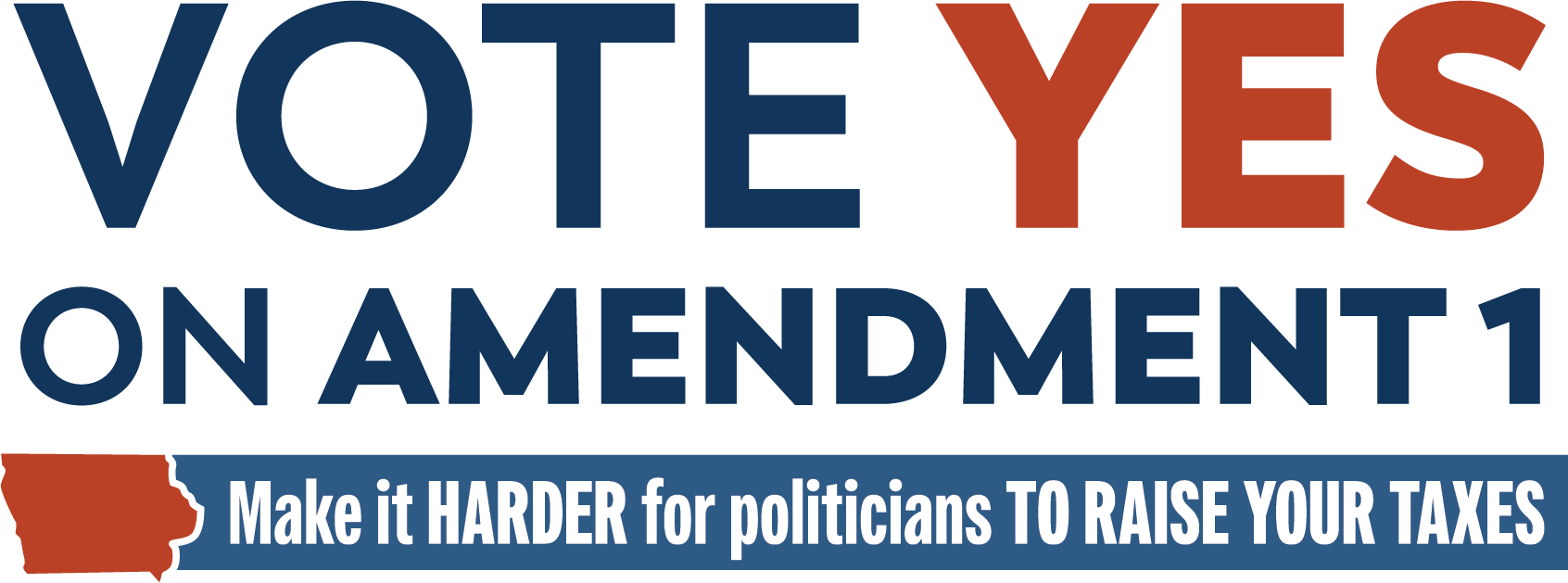
Iowans for Tax Relief is launching a campaign to educate voters about the amendment and encourage them to support it, the group’s president, Chris Hagenow, said in a Wednesday, July 22, news conference.
“The whole goal of the campaign is simply to raise awareness that this is on the ballot and what it does,” Hagenow said. “We believe strongly that Iowans support the premise of this amendment, that they support the idea of it being harder to raise their taxes and they simply need to know what this amendment does and that it will benefit them to vote yes.”
The group is launching a website, maketaxhikesharder.com, and Hagenow said he expects the campaign will include television and radio advertising, as well as direct mail.
“I anticipate that it will have all of those things that Iowans are used to seeing when it comes to higher profile campaigns,” he said.
Iowa’s Republican-led Legislature has passed several rounds of income tax cuts since taking full control of state government a decade ago, lowering the individual income tax to a flat 3.8% rate and cutting corporate taxes. Hagenow said passing the constitutional amendment would provide “protection” for Iowans against future tax increases.
“This is future proofing,” Hagenow said. “It’s securing the gains that we’ve made over the last 10 years from what may come. Because legislatures come and go and the political winds may change.”
Opponents say the proposed amendment is “reckless” and will endanger Iowa’s ability to provide basic services.
“We have real concerns about what it means for the sustainability of Iowa’s fiscal situation, our state’s ability to continue to provide the resources that Iowans expect for our public schools, for health care, water quality, all the things that Iowans care about,” said Anne Discher, executive director of Common Good Iowa.
Iowa is spending about $1.2 billion more than it it will take in during the current fiscal year with state revenues down due to the tax cuts.
The Legislature is tapping into the state’s surplus and the multi-billion dollar Taxpayer Relief Fund to make up the difference. Republicans have saved up money in the Taxpayer Relief Fund for years, intending to smooth over the lost funds while they bank on state revenues rebounding.
But Discher said those reserves won’t last long at the current pace.
“Our surpluses at current rates of spending and revenue growth will be gone in just a few years,” she said. “And now they want to kind of lock in this very reckless fiscal situation with this amendment that would make it incredibly hard to raise income taxes.”
Hagenow said it will still be up to lawmakers to decide whether they want to raise income taxes in the future.
“This doesn’t prevent a future income tax increase,” he said. “It’s not taking that off of the table, it just means they need a broader consensus for it.”
But Discher said a two-thirds vote would be “an almost insurmountable hurdle.”
“In our polarized times, a two-thirds majority is an incredibly high bar,” she said.
Hagenow said he’s not concerned about arguments against the amendment from its opponents, pointing to a June poll commissioned by Iowans for Tax Relief that found 74% of likely voters said they would vote in favor of the amendment compared with 16% who opposed it.
“I expect there are people that might be reluctant to support something like this, but I think they’re in a distinct minority of Iowans,” he said.
Gov. Kim Reynolds told reporters July 22 that she supports the amendment “100%.”
“I love that it’s going to the voters because that’s their money,” she said. “It’s taxpayer dollars that we operate on, and we should always be just very conscientious of how we’re spending those dollars.”
Read the article HERE.